


Copyright © 2006 Gene Michael Stover. All rights reserved. Permission to copy, store, & view this document unmodified & in its entirety is granted.
These are some ideas about capitalism & socialism. I expect they will be useful to no one but me.
If I have any point to make here, it's that neither capitalism nor socialism remains fair without appropriate pressure from the government.
In a capitalist economy, competition reduces because some capitalists succeed so thoroughly that new, small competition cannot compete with them even when capitalism is working as it claims it should. So the government must limit the size of the grossly large capitalists, possibly by ``busting trusts''1.
In a socialist economy, wealth is distributed equally, which avoids the problem of capitalism, but the system itself does not inherently motivate efficiency, at least not among workers who cannot see beyond today to the longer term. So the government must light a fire under their butts.
To summarize into two hopefully memorable points:
The government intervention is necessary because capitalism ensures the benefits of competition, but it does not say anything about how competition is created.2
Again, the government intervention is necessary because the economic system guarrantees some benefits (fair distribution of ever-more-inexpensive products, in this case) but does not inherently provide motivation to work more efficiently.
According to Merriam-Webster online on 2006 May 29, capitalism is ``an economic system characterized by private or corporate ownership of capital goods, by investments that are determined by private decision, and by prices, production, and the distribution of goods that are determined mainly by competition in a free market''.
According to [3], capitalism is...
...an economic system in which one class of individuals (``capitalists'') own the mans of production (``capital'' goods, such as factories & machinery), hire another class of individuals who own nothing productive but their own power to labor (``workers''), & engage in production & sales in orer to make private profit.
Since this definition is from an author which favors Marxism, it may be a Marxist's definition of capitalism.
I notice that the definition of capitalism in [3] claims that the means of production are owned by individuals. In the real world, the means of production are more often owned by corporations & other types of companies. So is this definition of capitalism out of date? Or is it applicable because the law considers corporations to be persons?
This was my first attempt at a mathematical model of capitalism. I wrote it on 2006 May 10, before I had done any research.
On second thought, this ain't so bad at all. Nice work for someone who hadn't done his research.
They say that a company will charge ``what the market will bear'' or that prices will rise or fall until supply equals demand. These claims are incomplete, containing nonsequitirs, & they are misleading.
In a basic form of capitalism, a manufacturer must sell product for more than it cost to make the product. (There are contra-examples, including computer game consoles (sold at a loss so the manufcaturer can sell games at a profit) & attempts to drive the competitor out of business). It's true for the most part that a manufacturer must sell its products for more money than was required to make them.
Customer cannot pay more than he can afford. Wait. Due to credit or complex budgets (or lack of a budget), customer could buy item that will prevent him from, say, paying rent. So he can't afford it, but he buys it anyway. So we can only say ``won't buy what he can't afford'' of recurrent purchases.
Also, he won't buy a product if the alternatives cost less. It's more complicated, actually. As the price increases, consumers are less likely to buy it such that, when the price is greater than that of the alternative, almost no one will buy it. Brand loyalty defeats this, & so do hidden costs. They don't defeat it, but it's because of them that someone might buy a product even when equivalent alternatives cost less.
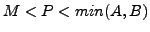
So in theory, the price  of a product is
where...
 is the price of manufacture,
 is the price of the alternative, &
 is what the consmer's budget allows.
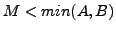
If
 , the manufacturer cannot produce the
product cheaply enough.
, the manufacturer cannot produce the
product cheaply enough.
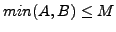
If  , then the alternatives are better, & no one will
buy the first product.
, then the alternatives are better, & no one will
buy the first product.
If  , then consumers can't afford it, so no one can
buy it.
, then consumers can't afford it, so no one can
buy it.
If
 , & we're in this theory world, then the
manufacturer will set
, & we're in this theory world, then the
manufacturer will set
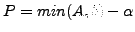 , where
 is positive but very small. Prices will reduce
only if or reduce. Reduction of is called
competition. Reduction of is called consumers being
fucked by the economy. Reduction of is called increased
efficiency & leads to greater profits for the manufacturer
but not directly to lower prices or better quality for the
consumer.
is positive but very small. Prices will reduce
only if or reduce. Reduction of is called
competition. Reduction of is called consumers being
fucked by the economy. Reduction of is called increased
efficiency & leads to greater profits for the manufacturer
but not directly to lower prices or better quality for the
consumer.
Under such a system, the consumer benefits only when
reduction of is common, whereas manufacturer benefits
when decreases, increases, or increases. If
there is no , consumes get squeezed.
Maybe such a system would be fair & maybe it wouldn't, but factors in real life prevent it from working like this.
Let's turn the equation inside-out. Instead of showing ,
let's show the probability that a consumer will purchase the
product.
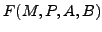 is the probability that consumer will choose
the product given , , , & .
is the probability that consumer will choose
the product given , , , & .
In the theory world,
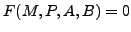 when
when
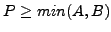 , but in
reality, product loyalty & hidden costs mean that
, but in
reality, product loyalty & hidden costs mean that
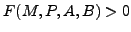 even
when
.
even
when
.
I guess we could approximate hidden costs with a
function argument  ,
,  . The consumer's
perceptionof is
. The consumer's
perceptionof is  where
where
 . So to compute
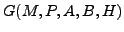 we do this:
;;; pseudo-Lisp

(defun f (m p a b) ...)

(defun g (m p a b h)
  (let ((r (- (random (* 2 h)) h)))
    (f m (* (1+ r) p) a b)))
Empirical data could approximate . Is identical for
all industries?
Wait. is not a scalar. It's a function with a
bell-shaped distribution, & the peak of the distribution is
not at .
It's created
by factors such as brand loyalty, advertising,
familiarity, packaging, & other factors which are not
related to the product's effectiveness & price.
The domain of is . So distorts .
Some explanation added later: If the manufacturer gets
its wish with respect to brand loyalty & the effectiveness
of its advertising campaign, the function will shift the
apparent cost of the product to a lower value. In other
words, if is the true cost &  is the apparent
cost to the consumer, then the manufacturer will use
advertising, brand loyalty, & other tricks to make sure
that
is the apparent
cost to the consumer, then the manufacturer will use
advertising, brand loyalty, & other tricks to make sure
that  .
.
 . If advertising
(for example) works, then
, &
more people will buy the product than without advertising.
(In this model, advertising distors consumer's perception of
the product's price. In reality it also makes consume aware of the product which is necessary for sales.)
. If advertising
(for example) works, then
, &
more people will buy the product than without advertising.
(In this model, advertising distors consumer's perception of
the product's price. In reality it also makes consume aware of the product which is necessary for sales.)
You could also create a function to distort . This would
be a kind of slur-campaign to inflate the consumer's
estimation of the cost (not the
value) of the competitor's product.
In my opinion, capitalism & socialism are equally valid techniques for describing or manipulating the connection between work & product. The two techniques approach the problem from opposite directions.
Neoclassic capitalist economists make good arguments that Marxism is a subset of neoclassicism. In other words, Marxism can be described as neoclassicism with some simplifying assumptions.3
Marxist economists make good arguments that neoclassicism is a subset of Marxism.4
Two sets which are subsets of each other are by definition the same set.
Capitalism provides motivation to work efficiently & diligently, but it requires external intervention to retain competition & keep a ``lavel playing field''.
Socialism enforces competition & the ``level playing field'' but requires external intervention to provide motivation to work efficiently & diligently.
Neoclassical capitalist theories began with attempts to maximize the efficiency of limited resources in individual factories & companies.5 It is a form of micro-economics.6
Marx's economic theories began with observations about the hardships of workers & other problems in society as a hole. To use a common term from today, Marx used a holistic viewpoint when he began his analysis.
Capitalism (both classical & neoclassical) & socialism assume that prices & demand will find an equilibrium in the long-term & that fluctuations in the long-term will be minimal, always equalizing soon after being disturbed.
Maybe assumptions of equilibrium made sense to 18th & 19th century minds, but modern mathematics knows that many systems do not have a steady state or have far more parameter combinations which avoid a steady state than ones which achieve it.
I agree that economic theory of capitalism is often used to justify hedonistic behaviour on the part of those in power, but that primitive & unfortunate reason to use capitalist theory does not invalidate the theory.
Socialist arguments could be use & probably has been used for exactly the same reason. The only reason they are used that way less frequently is that socialism is globally unpopular at this time.
The classic Adam Smith claim is that a figurative ``invisible hand'' guided independent entities in the economy to make astoundingly wise decisions.
How wise is Adam Smith's hand?
I often cook food for myself. I make fancy meals of curries (including grinding the fresh spices with a mortar & pestle), home made bread, & carefully selected wine (usually an inexpensive one). Obviously, a restaurant can prepare food which is as good & with a better presentation, & I wouldn't have to lift a finger once I sat down at the table. If Adam Smith's invisible hand is guiding me, why would I make my own meal instead of going to a restaurant?
The obvious answer is that it costs less to prepare my own meal.
But the restaurant prepares more meals every day. Surely they are more experienced at food preparation & do it more efficiently? Hmmm...Nevertheless, I'll accept for the moment, for argument, that I prepare my own food instead of visiting a restaurant because it costs less. I could visit a restaurant (& I do about every other night), but I chose to make my own food.7
What if I couldn't afford some product or service, but it had to be done? I have sometimes changed the oil in my car on my own instead of visiting a mechanic. In this case, I assure you that I definitely do not enjoy doing it. I've changed my own oil when taking my car to a mechanic did not fit into the budget.
Think about that. I could not afford to take my car to a mechanic, so I did the job myself. But I earn more money per hour than Jiffy Lube does for my business & certainly more than one of their mechanics does to change the oil in my car. But Jiffy Lube probably does it more efficiently. It took me more time to change my own oil than it would have taken Jiffy Lube, & I earn more money per hour than Jiffy Lube's mechanics do, so it was more expensive for me to change my own oil than for Jiffy Lube to change it for me, yet paying Jiffy Lube to do it didn't fit in my budget. If Adam Smith's invisible hand directs entities to spend their capital most efficiently, if the products & services delivered more efficiently get the business, then how could I possibly have chosen to change my oil myself? (Again, I assure you that I most definitely did not do it for the entertainment value.)
Possibilities include...
These are random thoughts I've had on the topic but haven't developed them. Don't take anything here seriously. It's just brief notes to remind myself of what I was thinking & maybe what to research next.